
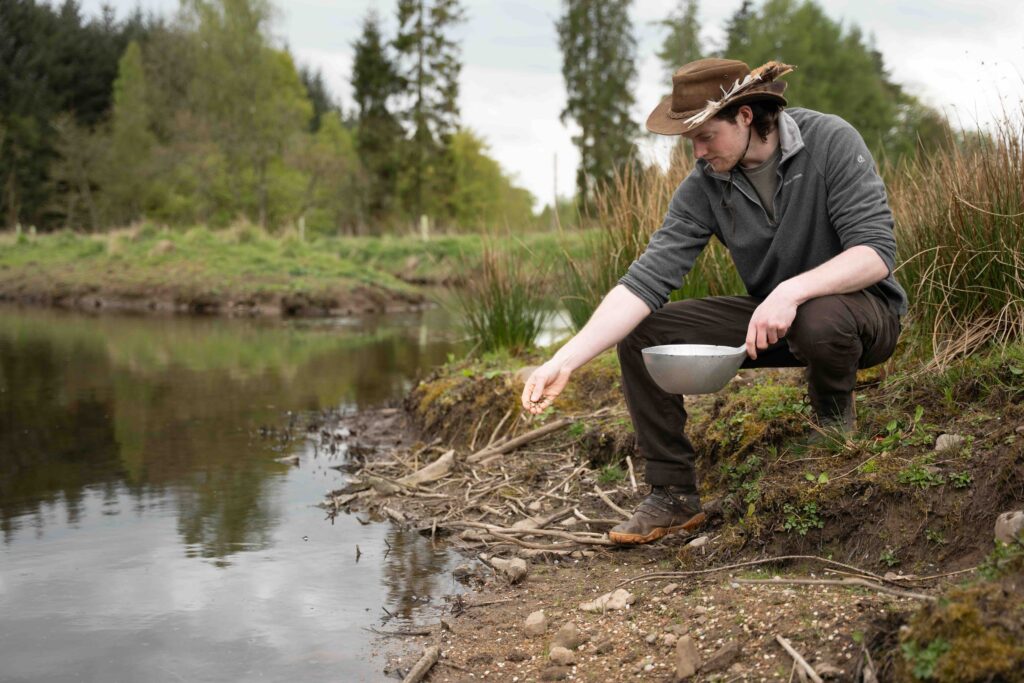
SCOTLAND: The Big Picture welcomes a new wildflower seed mix designed to ease coexistence between people and beavers, which launched in Scotland this month.
‘Beaver Mix’ is a collaborative project between Perthshire-based rewilding business Alba Fiadhaich and Scotland’s leading wildflower seed producer, Scotia Seeds, based in Angus. Developed through a coordinated effort drawing on ecological research, seed production expertise and practical restoration experience, the native mix is designed to restore nature-poor riverbanks and woodlands with plant species favoured by beavers – helping diversify habitats while potentially reducing browsing pressure on trees.
‘The Beaver Mix came about from asking how we can help people live alongside these industrious ecosystem engineers,’ explains Munro Kerr, of Alba Fiadhaich. ‘While beavers bring huge ecological and climate benefits to our environment, they also cause mixed reactions as communities adapt.’
Munro, who grew up in Aberfeldy and worked on traditional estates before studying ecology, has seen these divisions first-hand. But this journey through contrasting perspectives – combined with a lifelong love of nature – has instilled a unique empathy that makes him both compassionate and optimistic about the debates that often characterise nature recovery in Scotland.
‘If we want meaningful change we need to work together. Even the most polarised views often have more in common than we think. And sometimes with ecological issues, the solution can be found by working from the ground up – in this case, literally.’
European research shows that up to 70% of a beaver’s annual diet consists of herbaceous plants such as wildflowers, grasses and waterside vegetation, with woody material more important in winter.
The mix draws on research from Germany, Norway and Czechia, alongside observations from Scotland’s west coast, and has been tailored to local riverbank habitats through close collaboration between Alba Fiadhaich and Scotia Seeds.
“It’s great to be able to provide a mix of native plant seeds which have been shown by research and observation to be food plants of beavers,” adds Giles Laverack, Director of Scotia Seeds. “Some of the plants in the mix, like yellow flag iris, can also be seen in the construction of their dams. Using this mix will help to restore the native plants and habitats along rivers and watercourses, that so much of our wildlife depends on.“
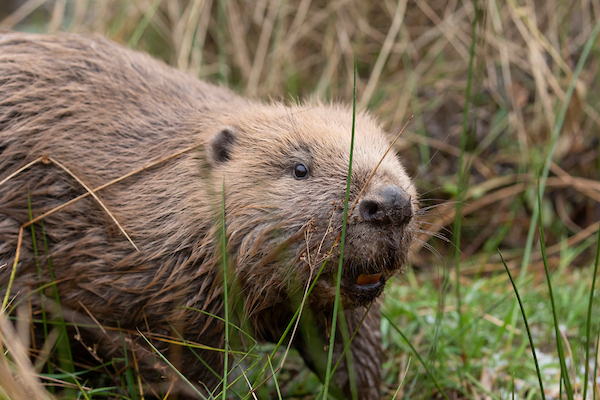
Beaver Mix is intended for ‘buffer zones’ alongside watercourses, with best results achieved by sowing into lightly disturbed, damp soils within 10–20 metres of rivers, burns and lochs.
For Munro, the project represents a broader shift in thinking about nature restoration: ‘Tree planting alone won’t fix our habitats. We need wildflowers, fungi, insects and healthy soils – the whole system. A wood isn’t really a wood without its wildflowers.’
Although Scotland has around 18% forest cover, only a small fraction is ancient woodland, and even less supports a full complement of native ground flora.
James Nairne is Project Manager of the Northwoods Rewilding Network coordinated by rewilding charity, SCOTLAND: The Big Picture. “Alba Fiadhaich has supported partners across Northwoods with practical rewilding, from seed islands to leaky dams,” he explains. “Beaver Mix is a great example of innovation rooted in lived experience. Richer ground flora benefits not just beavers, but pollinators, birds, soils and the resilience of the overall ecosystem.“
Munro hopes the product will become a staple: “In some ways, beavers have shown us how degraded our river systems are. I hope Beaver Mix helps to drive wider restoration and a re-think around what healthy rivers and woodlands should look like.”
Beaver mix is available from Scotia Seeds at https://www.scotiaseeds.co.uk/shop/beaver-riparian-mix/