
Highlands and Islands Enterprise has identified more than £100 billion in potential investment opportunities across the region, but businesses say housing, transport, childcare and skills must be addressed if the Highlands is to realise its full economic potential.
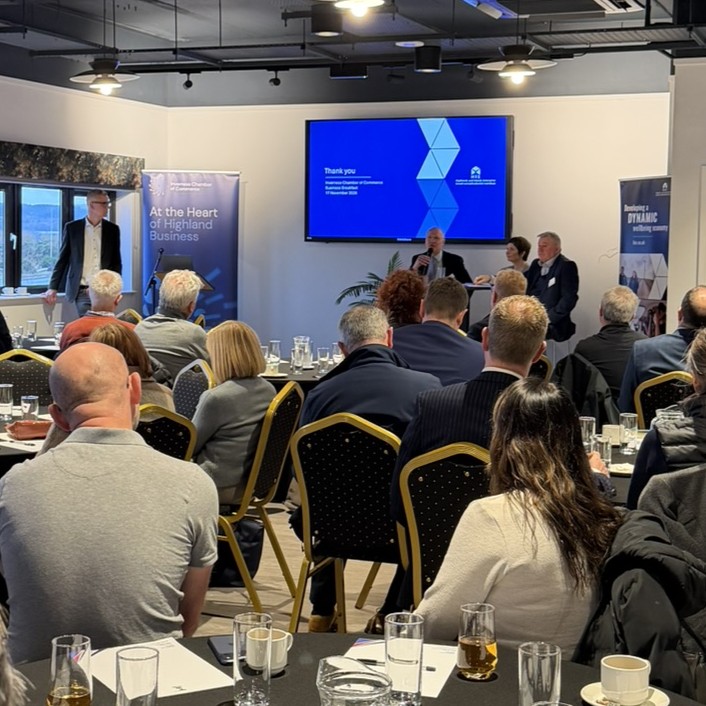
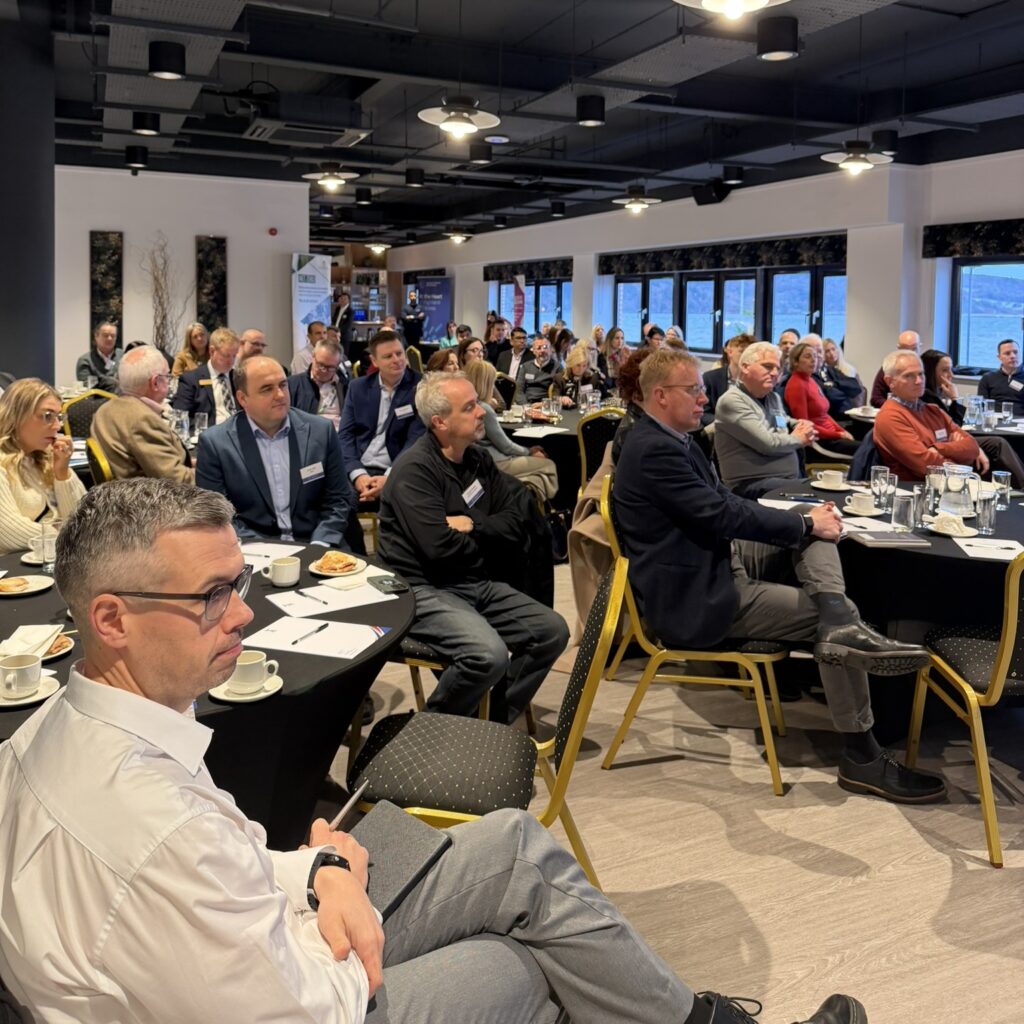
More than 80 business representatives joined Inverness Chamber of Commerce for a Business Breakfast with the Highlands and Islands Enterprise (HIE) leadership team this week, on 17 November, hearing how significant investment opportunities could help shape the region’s economic future – and what needs to happen to make the most of them.
Held in the newly refurbished conference suite at Inverness Caledonian Thistle Football Stadium, the event brought together HIE Chair Angus Campbell, Chief Executive Stuart Black and Area Manager – Inner Moray Firth Audrey MacIver for an open discussion about the opportunities, challenges and priorities facing the Highlands and Islands.
The headline figure from the presentations was the scale of potential investment identified by HIE: £100.35 billion across a range of sectors and projects. Adjusted to take account of project status, the figure stands at £71.28 billion, underlining the scale of the opportunity while recognising that not all projects are at the same stage of development.
Offshore wind accounts for the largest share, at more than £40.5 billion, followed by supporting infrastructure, including grid investment, at almost £21.9 billion. Pumped storage hydro represents a further £13.15 billion, with substantial opportunities also identified in onshore wind, green hydrogen and marine energy.
The opportunities extend well beyond energy, with investment also identified in life sciences, digital health, space, natural capital and marine biotechnology. Together, they reflect the breadth of the region’s economic potential and the opportunity to build on established industries while developing new areas of growth.
Turning regional opportunity into local prosperity
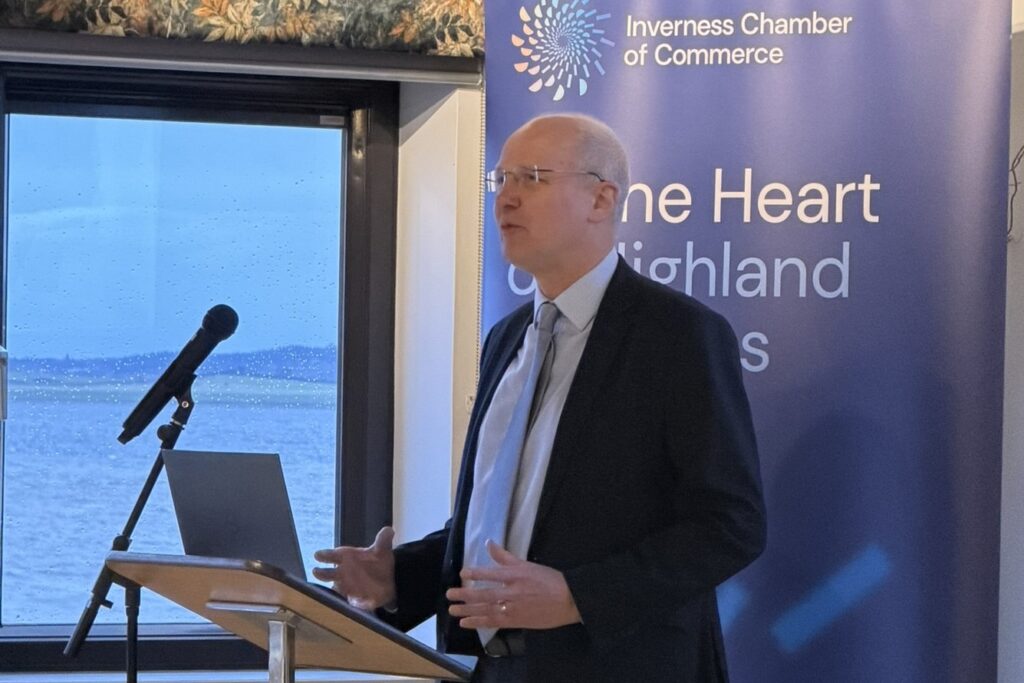
Setting out HIE’s five-year strategy and annual operating plan, Stuart Black highlighted the organisation’s ambition to build a greener, fairer and more resilient Highlands and Islands, with net zero, fair work and inclusive growth, and regional transformational opportunties central to its approach.
He spoke about the region’s contribution to the energy transition, observing, “We’re punching above our weight as a region.”
However, he was clear that realising the scale of investment ahead depends on more than the projects themselves. Housing, transport connectivity, workforce availability, skills, childcare and grid access charges remain significant challenges that need to be addressed if businesses and communities are to benefit.
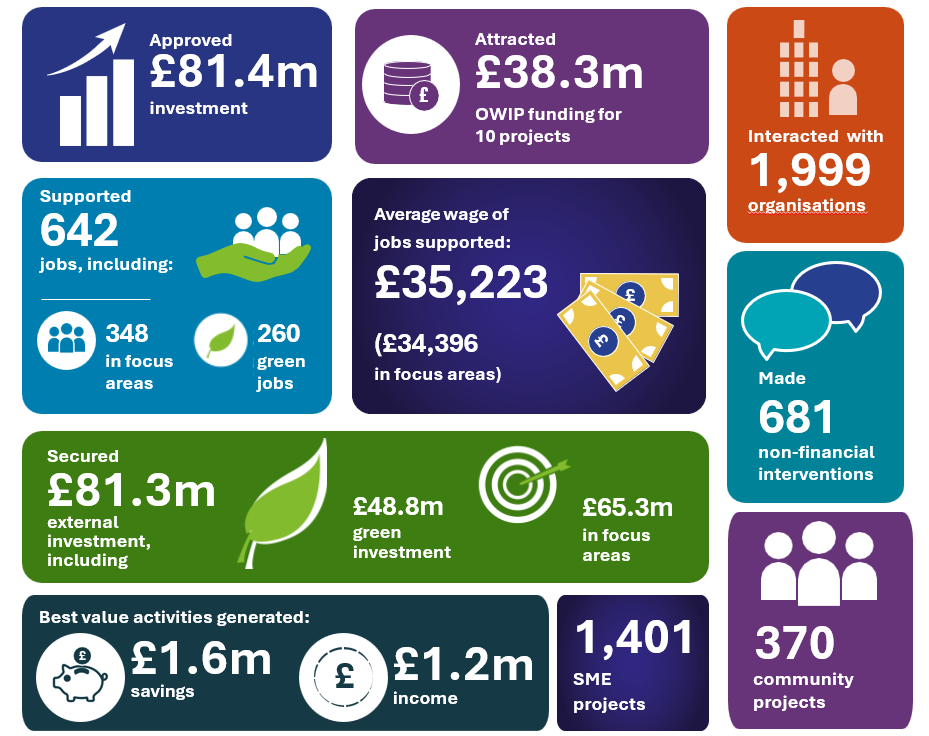
HIE’s latest figures for 2025/26 demonstrate the breadth of its existing work. The organisation interacted with almost 2,000 businesses and organisations, supported 642 jobs – including 260 green jobs – and delivered more than 1,400 SME projects and 370 community projects.
Energy accounted for £31.3 million of HIE investment during the year, with tourism receiving £8.9 million and food and drink £8 million. Investment also supported technology and advanced engineering, life sciences and creative industries, highlighting the importance of a diverse business base alongside major infrastructure and energy developments.
For the Inner Moray Firth, Audrey MacIver outlined how the area can build on its strategic position in the energy transition, established industrial strengths and growing innovation assets.
Inverness Campus, the Inverness and Cromarty Firth Green Freeport, energy infrastructure and the region’s visitor and community assets were highlighted as important areas of focus. HIE’s four priorities for 2026/27 are centred on people, place, planet and prosperity, with a particular emphasis on aligning skills with emerging opportunities, developing Inverness Campus, supporting the energy transition and encouraging productivity, innovation and inward investment.
The underlying ambition, she explained, is to convert national and regional opportunities into visible benefits for businesses and communities across the Inner Moray Firth.
Businesses put the challenges on the table
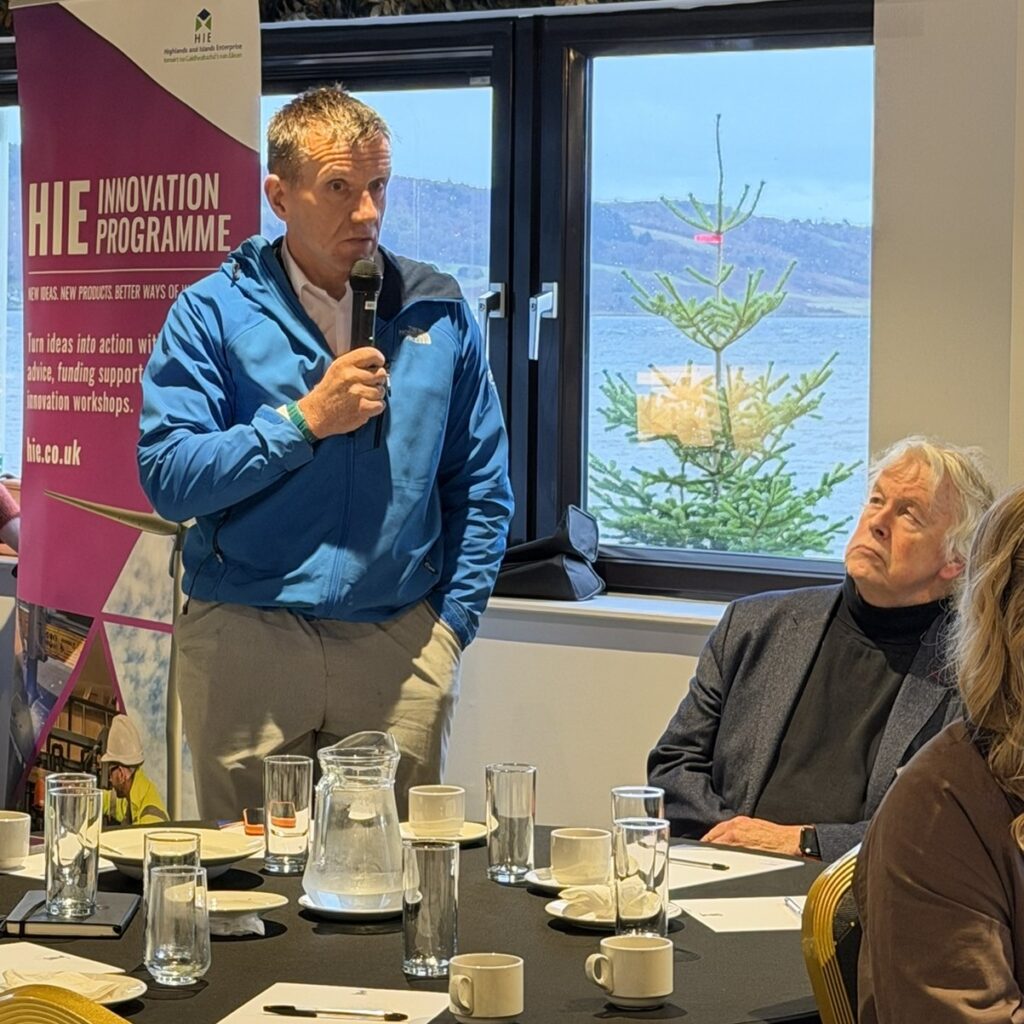
The presentations prompted a wide-ranging Q&A, with business representatives raising practical questions about what the investment pipeline means for employers, their workforce and the communities in which they operate.
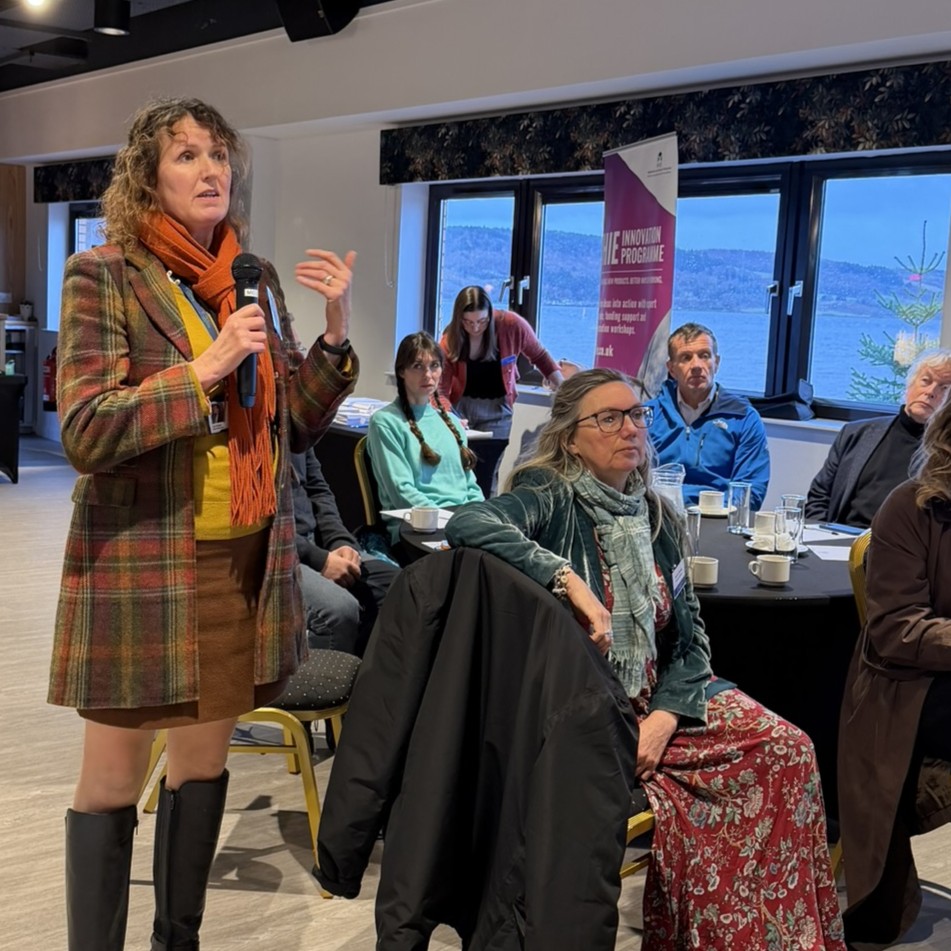
Childcare was among the issues raised by Jaci Douglas of CALA, who highlighted the impact of provision and affordability on the region’s ability to attract and retain workers – not just in rural communities but in Inverness itself.
She questioned how HIE could help address what businesses see as a lack of momentum at government level. Angus Campbell acknowledged the importance of the issue, confirming that HIE continues to raise childcare with ministers and will maintain pressure for progress. He stressed that childcare must remain firmly on the agenda alongside housing and transport.
The pace of the energy transition was another key theme. Responding to a question from Inverness Chamber Chief Executive Colin Marr about whether offshore wind activity should be described as slow rather than stopped, Stuart Black reinforced the distinction. While some projects are progressing more slowly than anticipated, investment in manufacturing continues, with Sumitomo Electric cited as an example. HIE is also supporting projects across the Highlands and Islands, recognising the importance of the wider supply chain to regional opportunities. Maraen Port of Nigg near Inverness, cited as a prime example of this, which has been selected as the marshalling harbour to support delivery of the world’s largest offshore wind farm under construction, the 3.6GW Dogger Bank Wind Farm in the North Sea.
The discussion also turned to the workforce required to deliver major infrastructure projects. Kirsty Macpherson of Brodies LLP asked how the region would provide the hundreds of skilled workers needed if pumped storage hydro projects move quickly into delivery.
Stuart highlighted opportunities for people already working in the region to transfer their skills, including workers moving from the whisky industry. HIE will continue working with Skills Development Scotland and the University of the Highlands and Islands to highlight career opportunities, while Audrey pointed to Workforce North’s work to understand labour requirements.
The wider discussion highlighted the importance of giving young people greater visibility of the careers emerging in the region, attracting new talent and creating opportunities for people to build long-term careers in the Highlands rather than having to move elsewhere when individual projects finish.
Making sure local businesses benefit
The scale of major infrastructure investment also prompted questions about how smaller businesses can compete for talent and secure a lasting share of the economic benefits.
Terry Stebbings of Proterra Energy Ltd highlighted the difficulties faced by smaller employers when larger organisations can offer higher wages and benefits. He also raised concerns about access to relevant local engineering training, and the risk that gaps in provision could make it harder for smaller businesses to develop and retain skilled people.
Stuart acknowledged the challenges and expressed concern about responsibility for apprenticeships being passed to the Scottish Funding Council and the competition for these funds from the university sector. He encouraged the Chamber to make the case for greater regional influence over how government funding for skills is allocated and confirmed it would support the Chamber and UHI where it could.
Cross-industry collaboration was another recurring theme. Mark Williams of Murphy highlighted the transport difficulties facing businesses working across the Highlands, remarking that it could be easier to get from Aberdeen to West Africa than to Thurso.
He also shared how Murphy works collaboratively with direct competitors BAM and Balfour Beatty on major projects, suggesting there are lessons for other sectors in sharing expertise and working together to maximise the benefits of investment.
The discussion explored how businesses could retain and transfer skilled workers between projects, helping people build sustainable careers in the region. Better transport links, housing and training opportunities were all seen as important parts of creating the conditions for that to happen.
On connectivity, Stuart identified the A96 corridor as a shared priority and encouraged HIE and Inverness Chamber to work together to make the case for progress with the relevant decision-makers.
Building on the region’s wider strengths
The conversation extended beyond energy and infrastructure, with John Housego of Aquascot raising food security and the resilience of regional supply chains.
Recent weather disruption to road and rail deliveries had highlighted the vulnerability of food supply routes, particularly for businesses operating across a geographically challenging region. In conversations after the event many delegates highlighted the importance of this question and the difficulty of finding a solution. In responding Stuart Black referenced the potential for local food production, agricultural innovation and technologies such as AI and robotics to strengthen resilience and create new business opportunities.
Siobhan Neylon of Inverness Fringe raised the importance of creative industries and the need for places where creativity can thrive. Audrey MacIver recognised the disappointment surrounding the city’s unsuccessful City of Culture bid, but emphasised that the ideas and partnerships developed through the process should not be lost. Venues, capital investment and projects such as the Gaelic Centre were among the opportunities identified.
There was also discussion about closer collaboration with the north east and Aberdeenshire, particularly around transferring oil and gas expertise into renewables. Stuart highlighted Inverness’s growing role in the energy transition, pointing to businesses such as Aurora Energy establishing a presence in the city and the potential to build stronger links across the wider region.
A shared role in delivering the opportunity
Reflecting on the discussion, Inverness Chamber Chief Executive, Colin Marr, reinforced the importance of businesses, industry, education providers and public bodies working together to ensure the region is ready to take advantage of the investment ahead.
Colin Marr, Chief Executive of Inverness Chamber of Commerce, said, “The scale of the opportunity for the Highlands has been well articulated by HIE and others. It is significant, but current progress is slow. Businesses have been clear that longstanding barriers around transport, housing, childcare and skills cannot be allowed to hold back progress. The Chamber has an important role in bringing these issues, and some wider national policy barriers, to decision-makers and ensuring that local businesses have a voice in shaping the region’s economic future.
“The Business Breakfast provided an opportunity for businesses to put those challenges directly to HIE’s leadership team, share their experiences and explore where closer collaboration could make a difference. We’re grateful to the senior team at HIE for giving the business community the opportunity and responding openly to questions.
“We’d again encourage all business across our membership to participate in our 2026 Business Insights Survey which gives us the data to back up our policy positions on all these key issues holding your businesses back so we can take these insights straight to local and national decision makers.
“With the scale of investment identified across the Highlands and Islands, the opportunity is significant. The challenge now is to ensure the infrastructure, skills and business environment are in place to turn that potential into lasting prosperity for the region.”