
By Colin Marr, Chief Executive, Inverness Chamber of Commerce
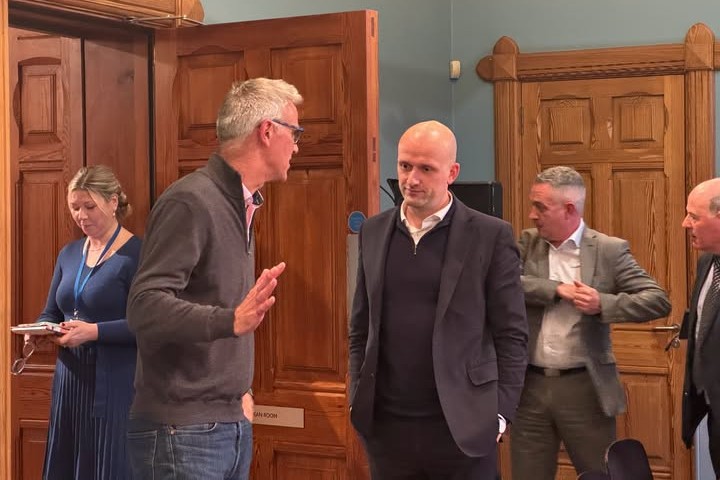
This week (Tues 10 Nov), I attended the A9 Dualling Programme Stakeholder Briefing at Eden Court, organised by Transport Scotland and opened by Stephen Flynn, Cabinet Secretary for Economy, Tourism and Transport. The meeting brought together stakeholders and business leaders from across the Highlands to hear the latest update on the programme, including progress across the ten sections of the route between Perth and Inverness.
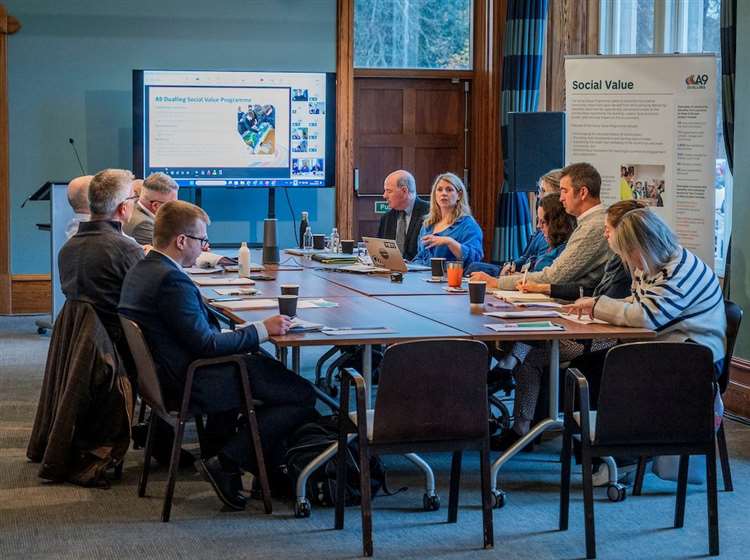
There was positive news. Transport Scotland confirmed that the programme remains on track to meet the milestones set out at the end of 2023, with the ambition of having 50% of the route dualled by 2030 and the full length completed by 2035. We also heard about progress on the procurement of the remaining sections, with a framework agreement worth almost £2 billion expected to conclude by the end of this year, providing a clear pipeline of work for contractors.
I congratulated the Cabinet Secretary and Transport Scotland on the progress made since 2023 and, importantly, on maintaining the timetable they published at that point. However, I also reminded them that we cannot overlook the 16 years of insufficient progress between the project’s original announcement in 2007 and the revised programme in 2023. That history has understandably left Highland businesses questioning whether the current commitment will be sustained. It is against that background that I asked why the capital funding for the project had not been ringfenced, particularly given the widespread political support for A9 dualling demonstrated ahead of the 2026 Scottish Parliament election. The Cabinet Secretary acknowledged the reasons for that lack of trust and, while he did not directly address the question of ringfencing, gave a “cast iron commitment” that the funding was not at risk.
For Highland businesses, however, connectivity does not begin and end with the A9. I used the opportunity to raise wider concerns about the region’s transport infrastructure, including the A96 and our rail links to the Central Belt. Our train journeys south have become slower over the past 30 years, which is hardly the direction of travel we should be taking if we want to encourage investment, attract talent and make it easier for businesses to operate across Scotland. The A96 is also inadequate for the demands being placed on it, particularly as we look to connect Highland renewables projects with the supply chain and expertise based in Aberdeen. In response, the Cabinet Secretary outlined the challenges around Scotland’s capital budget and listed a lot of projects elsewhere which are competing for that budget. He also acknowledged the complexity of dualling the A96, where some sections would require entirely new routes rather than straightforward upgrades. He reaffirmed the Scottish Government’s commitment to dualling the A96 and recognised the concerns about slower rail journeys but offered no firm date for the Inverness to Nairn bypass.
We should welcome the progress being made on the A9 but remain cautiously optimistic. Three years into a twelve-year delivery programme, the Government has so far maintained its commitments. That is encouraging, but much of the work still lies ahead, and the Highlands has waited too long already for this vital investment. We need to see that momentum maintained, the necessary funding delivered and the 2035 completion date achieved.
At Inverness Chamber of Commerce, we will continue to make the case for the transport infrastructure our businesses and communities need, whether that is the A9, the A96 or faster, more reliable rail connections. These are not isolated projects; they are essential to the Highlands’ ability to attract investment, support our industries, unlock the potential of our renewables sector and to enable our regions businesses to compete nationally and internationally. Highland businesses have been clear about the importance of connectivity, and we will continue to ensure their voices are heard.