
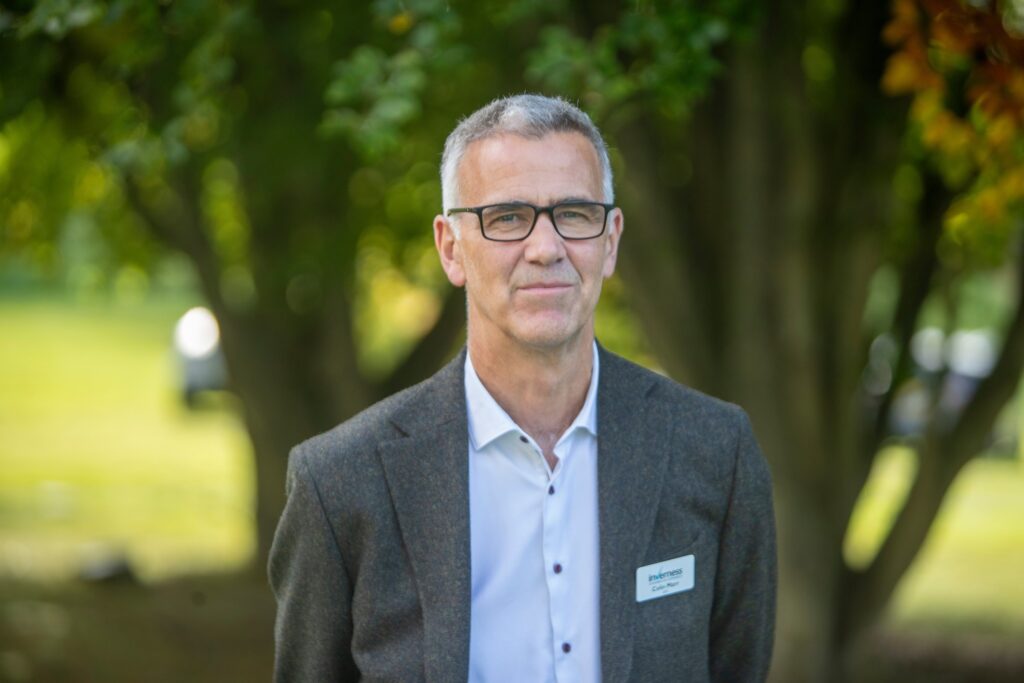
By Colin Marr, Chief Executive, Inverness Chamber of Commerce – published in the August 2026 edition of Executive Magazine, page 47.
Whenever there is a new Prime Minister it’s easy to get caught up in the politics – but business tends to look at things rather differently. Most business owners are less interested in personalities than they are in the decisions that follow. Will government create the conditions that allow companies to succeed? Will businesses have the confidence to invest?
Those are the questions that matter, regardless of who is in Number 10.
Andy Burnham has long argued that too many decisions are made too far away from the communities they affect. Throughout his time as Mayor of Greater Manchester, he made the case that local leaders often understand their economies better than Westminster. He has already indicated that he intends to take that philosophy into Downing Street and, has gone further with the establishment of No. 10 North. The question is whether its implications will reach into Scotland.
The British Chambers of Commerce has consistently argued that economic growth depends on creating the right conditions for business. It has welcomed moves that give places more control over their own economic future, while making it clear that any programme of devolution must deliver practical benefits for businesses. Stability and certainty remain important because they allow businesses to plan with confidence.
Here in Scotland, devolution of powers raises an interesting question.
For decades, many Scottish politicians have argued that decisions affecting Scotland should be taken in Scotland because Westminster is too far removed from the realities of our economy. Whether you agreed with that argument or not, devolution is now an established part of the way Scotland is governed.
But if Westminster can sometimes feel too distant from Scotland, can Edinburgh occasionally feel too distant from the Highlands?
The Highlands is not simply a smaller version of the Central Belt. Our economy looks different. The opportunities are different. The challenges facing a business in Inverness are not always the same as those facing a business in Portree or Wick. They are certainly different from those facing businesses in Edinburgh or Glasgow. Distance affects the cost of doing business. Recruiting people in areas of low population remains difficult in many sectors. Infrastructure failure matters even more here because there are fewer alternatives.
That is why I sometimes wonder whether Scotland’s devolution journey is complete.
Last week I met Charandeep Singh BEM, Chief Executive of the Scottish Chambers of Commerce, together with the chief executives of the other Highland Chambers. We spoke about global trade and about the opportunities presented by Scotland’s review of Non-Domestic Rates. Both conversations reinforced the same point. Policies are always stronger when they reflect the businesses they are intended to support.
The review of Non-Domestic Rates is a good example. It’s important that the review finally accepts that the current Non-Domestic Rates system is no longer fit for purpose. It needs complete reform rather than tinkering at the edges. The right reforms could encourage more businesses to invest across Scotland. The impact, however, will not be the same everywhere. A policy that works well in one part of the country may have very different consequences in another.
That is why regional voices matter.
It is also why the Chamber network continues to place such importance on international trade. While governments debate policy, businesses continue looking for new markets. From 8 to 10 September, Inverness Chamber of Commerce will lead a trade mission to Lille, creating opportunities for Highland businesses to build relationships with partners in northern France and to potentially use that as gateway to Europe. It is another reminder that our economy has always looked beyond our own borders.
The Highlands is entering a period of enormous opportunity. Investment in renewable energy continues to gather pace. Our food and drink businesses are winning customers around the world. New opportunities are emerging across the economy. The challenge is making sure decisions are taken by people who understand both the opportunities and the realities of doing business here. Experience tells us that decisions made elsewhere often work best for the places where they are made. That is another reason why the Highlands needs a stronger voice and to make more of its own decisions.
That is why Andy Burnham’s arrival in Downing Street caught my attention. Not because of party politics, but because of the principle he has championed for many years. If power should sit closer to the people it affects, then surely that principle deserves a wider discussion.
Scotland has rightly argued that more decisions should be taken here rather than in Westminster. Is it now time to ask whether some decisions should move beyond Holyrood and into Scotland’s regions?
That is not a criticism of the Scottish Government. It is a genuine question. Would ministers see stronger regional decision making as the next stage of devolution, or would they prefer powers to remain in Edinburgh?
For Highland businesses, it is a debate worth having. We know our economy is different. We know the challenges are different. We also know the opportunities are different. If Andy Burnham’s premiership starts a wider conversation about where decisions are made, then that conversation should not stop at the border. It should continue right through to the Highlands.