
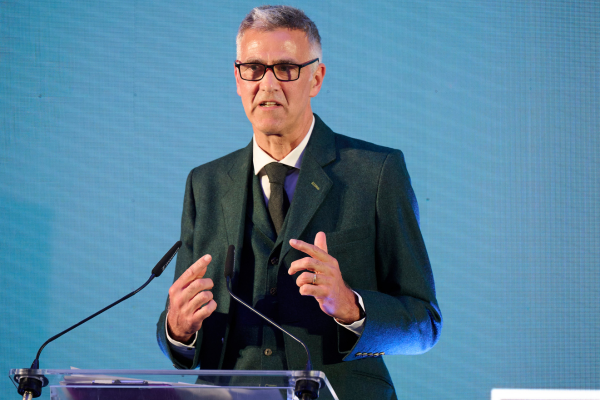
By Colin Marr, Chief Executive, Inverness Chamber of Commerce – published in the February 2026 edition of Executive Magazine, page 48.
Many Highland-based businesses are due to see significant rises in their rates bill from April 2026.
An increasing number of businesses have been in touch with Inverness Chamber of Commerce about the planned increase in their Non-Domestic Rates (often referred to as Business Rates).
One rural hospitality firm told us.“Our rates were £6,000 in 2020, rising to between £8,500 and £11,000 after the 2023 revaluation removed our Small Business Bonus. Under the 2026 proposals, we are now facing a £30,000 bill – nearly three times our 2023 rates, without anything like the corresponding growth in turnover or profit. That kind of increase simply isn’t sustainable.”
Non-Domestic Rates are based on the “rateable value” of a property multiplied by the “property rate” for that property. The rateable value is determined by independent assessors and is subject to regular revaluations. Recently the cycle of revaluations changed from every five years to every three years. In November last year businesses across Scotland started to receive their draft revaluations which will all be confirmed in mid-March 2026.
Many highland businesses successfully appealed their previous rates revaluation which in some cases took up to two and a half years. So, one of the problems with the new three-year cycle is that businesses who successfully appealed only received that good news a few months before their next revaluation arrived.
The hotel and hospitality sector (which is still the biggest private sector employer in the Highlands) seems to be particularly badly hit. One credible estimate is that a Scottish hotel pays around 70% more in rates than an equivalent business in England while city centre restaurants and pubs do only slightly better at 66% higher than equivalent English businesses. Many Highland hoteliers also feel that their rates are higher than other Scottish cities.
Another local hotel provider explained to us that the revaluation would increase their rates by 70%. While they agreed that their turnover has increased over the last three years, they argue that costs have increased further. These costs include the huge rise in employers’ national insurance contributions that started in April 2025 as a result of the late 2024 UK budget. They went on to say that the increase in rates may lead to shorter opening hours and longer off-season closure periods – all of which leads to employment uncertainty and increased anxiety for their staff. As the hospitality industry is a vital employer – especially in rural areas – its time that the Scottish Government took note of these concerns.
The position on rates is further complicated by a series of “reliefs”. These are sometimes introduced by government to support a particular sector. Recent examples have been for small businesses and for the hospitality sector. Sometimes “transitional” reliefs are introduced which will give a discount to a business to help them cope with a revaluation. As the name suggests transitional reliefs are only applied for a short period of time.
In their budget in January this year the Scottish Government reduced the property rate and introduced a number of reliefs to help with the revaluation. This seemed to be in recognition that the revaluation was having a detrimental effect on many businesses.
However, the Scottish Government also argue that the revaluation has only increased rates (on average) by 12.23%. So why are we seeing so many examples of much larger increases in the Highlands and why is the hospitality sector being hit so hard? One reason is that rateable values are meant to be based on how much a property could be rented for. There is currently no real market in the Highlands for operators renting hotels, so the assessors are meant to look at turnover and profitability instead. But the highland hotel sector, as a whole, has shown us that over the last three years their turnover has increased but that because of rising costs their profitability has decreased, so something appears to have gone wrong with this calculation.
The difference with equivalent businesses based in England is also tied in with rates relief where the whole hospitality sector in England enjoyed 40% rates relief for three years that was only passed onto a small part of the Scottish sector for a single year.
So, what should happen? I think the actions of the Scottish Government speak for themselves. If a rates revaluation in November leads to the need to announce rates relief in January, is that not an admission that the whole system is no longer fit for purpose.
It’s time that the business rates system caught up with our new reality. Many of our most successful and profitable businesses are now online suppliers. These businesses often limit their rates exposure through operating from warehouses in areas where land values are low, meaning that their rates in relation to their profits remain very low. The rates burden therefore falls disproportionately on traditional businesses who are reliant on property – often in city centres or rural locations where property valuations are difficult.
The business community has been calling for years for the non-domestic rates system to be changed. The system is now putting some of the Highlands most important employers at risk. That call has become urgent.
With a Scottish Parliament election this year we will be challenging all the candidates to tell us how they intend to tackle this urgent issue.